Merian Centre: CALAS research on violence and resistance in Latin America
Whether in Mexico, Argentina or Costa Rica - gender-specific violence is part of everyday life in many Latin American societies. Find out how power, gender and politics are linked in this interview with CALAS project manager Prof Dr Christine Hatzky.
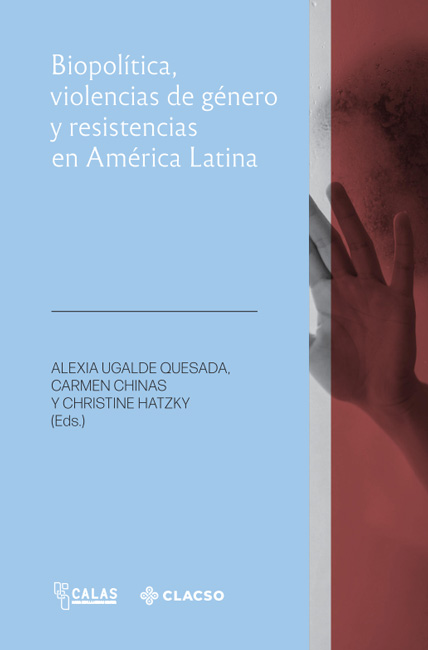
First an interdisciplinary CALAS conference in San José, Costa Rica, and now a comprehensive publication in Spanish: Biopolítica, violencias de género y resistencias en América Latina (CALAS/CLACSO, 2025), which you co-edited. Professor Hatzky, how does your analysis fit into the research programme of the Merian Centre CALAS?
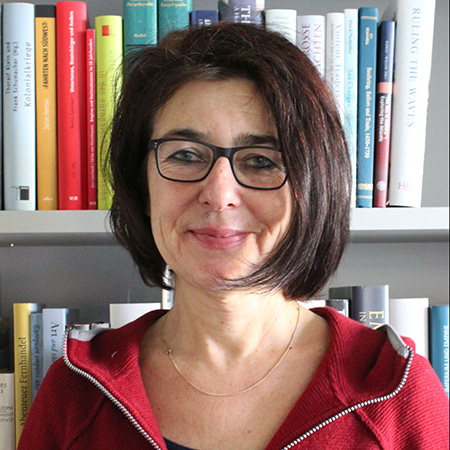
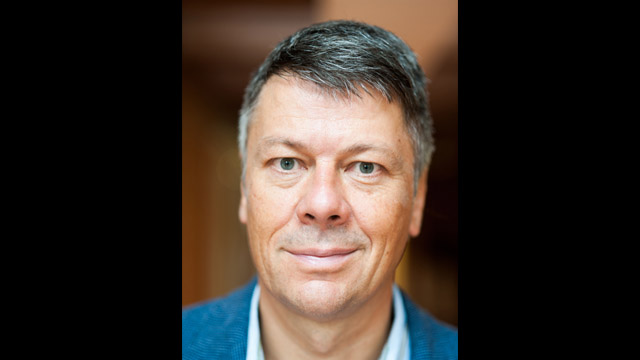
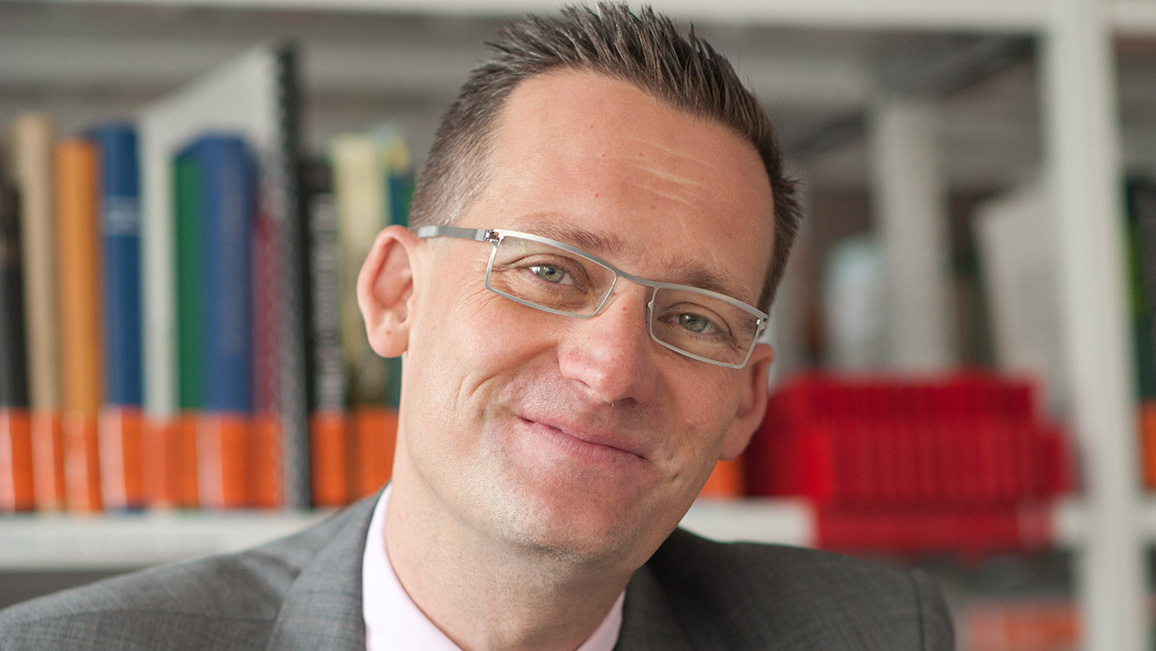
Prof Dr Christine Hatzky has been the sub-project leader of the Maria Sibylla Merian Center for Advanced Latin American Studies in Humanities and Sociel Siences (CALAS), which is funded by the BMFTR until 2029, since 2017. She is co-director of the CALAS Regional Centre "Central America and the Caribbean" at the Universidad de Costa Rica. Together with her colleagues in Costa Rica and Germany, she led the CALAS research line Visiones de paz: Transiciones entre la violencia y la paz en América Latina. (2019-2021) and will be responsible for further research lines on migration and mobility and the transformation of the world of work in Latin America as part of the new CALAS research programme "Broadening Horizons".
Christine Hatzky
In its main phase (2019-2025), our Merian Centre CALAS analysed various crisis phenomena (violence, social inequality, environmental degradation, identity crises) in Latin America and the Caribbean with a focus on the solution strategies that emerge from these societies. A cross-cutting task for all subject areas was the question of the extent to which women and non-binary gender identities are particularly affected by these crises and what strategies they develop to make these processes publicly visible.
The research line "Visions of peace. Transitions between violence and peace", which I lead, analysed various dimensions of violence in Latin America that go far beyond purely state violence processes: it looked at currently prevalent phenomena of violence, such as the growing connection between criminal and state violence. We came across gender-specific violence everywhere, such as feminicidios ("femicides"), the killing of women because of their gender. The huge scale of the cruelest executions of young women on the Mexican-US border reached the world public as early as the end of the 1990s. The protests and activities of the bereaved (especially the mothers) of the murdered women also attracted a great deal of attention, for example by initiating court cases against the perpetrators and launching spectacular, high-profile campaigns (e.g. the "Zapatos Rojos" ["Red Shoes"]). These eventually led to a new women's movement ("Ni una menos" [Not one less!]). It is primarily thanks to these civil protest movements from Latin America that sexualised violence is now also being publicly debated and punished in our societies.
The articles in this anthology show how power, gender and politics interact in Latin America. What role does "biopolitics" play in understanding today's forms of violence in Latin America?
Latin America is considered one of the most violent regions on our planet. The processes of violence are based on great social inequality, closely linked to ethnic and gender-based inequality. The concept of intersectionality, which has been further developed in Latin America and elsewhere, can be used to analyse the various forms of biopolitical violence and identify the population groups most affected. Biopolitical violence, also referred to as "necropolitics" in its life-destroying dimension, is based on power hierarchies that differentiate between social classes, ethnicity, gender or age. It is primarily directed against women and other vulnerable population groups. In conjunction with traditional, patriarchal gender roles, biopolitical violence opens the door to relations of exploitation and violence. This power over life is also expressed in the disciplining of bodies, especially female bodies, through the control of sexuality and reproduction, through violence in obstetrics, through sexual violence or the denial of rights.
Her analyses reveal historical continuities - such as colonial rule, racism and discrimination. To what extent do patriarchal, colonial structures still have an impact today?
Publication: "Biopolítica, violencias de género y resistencias en América Latina" (CALAS/CLACSO, 2025)
Christine Hatzky
During the conquest and colonisation of Latin America and the Caribbean, "biopolitics" was tested on a large scale for the first time. This first experience of modern colonial rule on a global scale made it clear that the conquest of territories went hand in hand with the subjugation of bodies. Sexual violence was a means of warfare and population control. From the 16th century onwards, the subjugation of female bodies for the purpose of reproduction was intended to compensate for the consequences of the pandemic, which had caused extremely high mortality rates and a correspondingly high population loss due to viral diseases imported from Europe. The establishment of racial differentiations and categorisations in the colonial era served to enslave indigenous and African population groups in order to exploit their labour. The systematic extractivism of natural resources and the destruction of livelihoods to establish a profit-driven economic model can also be traced back to colonial rule.
What role does resistance play in your publication?
Several of our authors explored the strategies and scope of feminist organisation in the face of patriarchal violence. For example, one contribution reflects on the resistance against sexual violence in Argentina and the more recent conceptual contributions of young feminists who analyse the background to this violence and are activists at the same time. But resistance also means debunking myths of masculinity. In this context, we discussed the scope of a relational feminism that analyses and combats the destructive dimensions of patriarchal power structures, but does not exclude men. This resonance and connection-oriented feminism emphasises the fluidity between the sexes and points to the close connection between human and non-human life on our planet. A perspective based on various indigenous Latin American cosmologies, among others. A reflection on the documentary film produced as part of our "Visions of peace" research line, which depicts the experience of forced disappearance from the perspective of a mother whose son "disappeared" in Mexico while fleeing from Honduras to the USA, rounds off the volume.
When you look at the debates in Latin America and Europe - what joint prospects do you see for the future? /What could stronger international networking, for example with Germany, look like?
The establishment of two Maria Sibylla Merian Centres in Latin America on the initiative of the Federal Ministry of Research, Technology and Space (CALAS and Mecila) was the largest investment to date in strengthening Latin American-German exchange in the social sciences and humanities. Over the past eight years, CALAS has provided important impetus for the development of joint research and continuous exchange. We are actively involved in creating "world knowledge" for the planetary future. We can benefit from the fact that CALAS gives us the opportunity to learn from our Latin American colleagues. Researchers from the German social sciences and humanities are now more present in the Latin American discourse and, in terms of science diplomacy, are certainly an alternative to the (still) dominant exchange with US scientific institutions.
Thank you very much for the exciting insights and perspectives, Professor Hatzky!
(The interview was conducted in writing on 21 November 2025; questions: Katrin Schlotter)
Maria Sibylla Merian Center for Advanced Latin American Studies in the Humanities and Social Sciences (CALAS)
The Maria Sibylla Merian Center for Advanced Latin American Studies in the Humanities and Social Sciences (CALAS) is based on cooperation between three German and four Latin American universities. It has been funded by the Federal Ministry of Research, Technology and Space (BMFTR) since 2017 in order to strengthen scientific cooperation between Germany and Latin America. Interdisciplinary research teams, to which Latin American and international academics are invited as fellows, are researching social crises in six interlinked focal areas. The research centres on how the experiences of locally, regionally and globally intertwined crises and processes of change are triggered, perceived and reflected upon by various actors, as well as the possible solutions that arise from the respective contexts. There are Merian Centres in various regions of the world, in India, Tunisia, Brazil and Ghana.
The Merian Centres and the internationalisation of the humanities and social sciences
The BMFTR initiative of the Merian Centres is a globally unique funding format for the internationalisation of the humanities and social sciences. At the five BMFTR-funded Merian Centres in Latin America, India and North and West Africa, fellows from Germany, the host country and other regions of the world conduct joint research from various specialist perspectives on a topic of their choice. They analyse social issues in their transnational contexts from a humanities and social science perspective and thus offer orientation and action knowledge for dealing with current global challenges.
We want this website to meet your needs as best as possible. To this end, we use cookies and the web analytics tool Matomo to learn which pages are visited most often. Your visit is currently not being counted. By allowing us to count your visit anonymously, you help us to achieve this goal. Web analytics enable us to adapt this website to your needs. No data is forwarded to third parties. For further information, please see our privacy notice.